
If you’ve ever found yourself counting screen minutes, negotiating “five more minutes,” or hiding the remote just to keep the peace, you’re not alone. Most parents start out trying to control screens because, honestly, it feels like the only option.
But here’s the quiet truth many of us discover the hard way:
You can’t monitor your child forever.
At some point, they have to learn how to manage screens on their own.
And that’s where the shift happens—from controlling screens to self-control.
This article isn’t about banning screens or pretending they’re harmless. It’s about helping your child build the skills they’ll need long after parental controls stop working.
Why Screen Control Stops Working (Eventually)
Screen limits are useful when kids are young. They give structure. They create boundaries. They help protect sleep and attention.
But pure control has a shelf life.
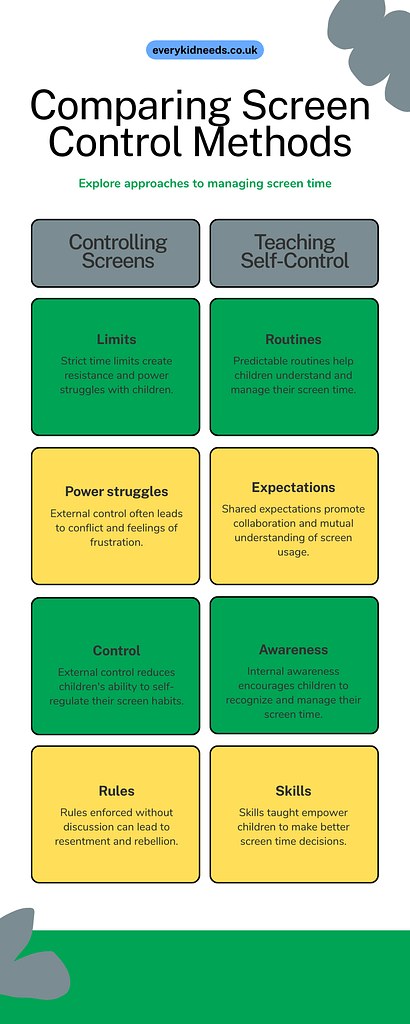
Here’s what tends to happen when control is the only strategy:
- Kids obsess over screens because they’re restricted
- Screens become “forbidden fruit”
- Power struggles increase
- Kids don’t learn how to stop on their own
- Teens get access… and go wild
That doesn’t mean you did anything wrong. It just means control alone doesn’t teach regulation.
Self-control has to be learned.
What Digital Self-Control Actually Means
Digital self-control isn’t about never wanting screens and definitely not about controlling screens. It’s about learning how to:
- Notice when something is becoming too much
- Pause without being forced
- Make choices based on time, mood, and responsibility
- Handle boredom without reaching for a device
It’s the same skill set we want for food, emotions, money, and friendships.
And like all skills, it’s taught slowly through practice, not perfection.
Step 1: Move from “Rules” to “Reasons”
Instead of:
“Because I said so.”
Try:
“Screens affect your sleep and focus, so we turn them off at 7.”
Kids don’t need long lectures, but they do need logic. When they understand the why, rules feel less random and more fair.
This doesn’t mean they’ll love it. But it builds trust.
Step 2: Make Screens Predictable (Not Random)
Random limits create arguments. Predictable limits build habits.
Try:
- Same screen window daily
- Same off-time every night
- Same expectations on school days
When kids know what to expect, they stop pushing as hard. The debate disappears because the rule isn’t emotional, it’s routine.
Think of it like bedtime. You don’t renegotiate it every night.
Step 3: Teach Awareness, Not Just Obedience
This part matters more than most parents realise.
Start asking questions like:
- “How do you feel after an hour on YouTube?”
- “Did that help you relax or make you more wired?”
- “Do you feel calmer or grumpier right now?”
You’re helping your child connect how screens feel to their own body and mood.
That’s self-regulation in action.
Step 4: Use Boundaries That Teach, Not Punish
Instead of:
“You broke the rule, no screens all week.”
Try:
“Looks like stopping was hard today. Tomorrow we’ll shorten screen time so it’s easier.”
This teaches:
- Actions have outcomes
- Limits adjust based on readiness
- You’re not the enemy—you’re the guide
It also removes shame, which is what often drives sneaky behaviour.
Step 5: Let Them Practice (Even When It’s Messy)
Here’s the uncomfortable part:
Kids need chances to mess up while you’re still there to help.
That might look like:
- Staying up too late once and feeling tired the next day
- Losing screen privileges temporarily
- Realising on their own that scrolling doesn’t feel great
These moments are not failures. They’re learning opportunities.
You’re teaching them to notice patterns and that is something no app or parental control can do for them.
Step 6: Model the Behaviour You Want to See
This part is hard. But it matters.
Kids notice:
- How often we reach for our phones
- Whether we scroll during conversations
- If we can stop when we say we will
You don’t have to be perfect. Even saying,
“I’m putting my phone down because I’ve been on it too long,”
teaches more than a lecture ever could.
What This Looks Like by Age
Ages 4–7
- Short, predictable screen windows
- Co-viewing when possible
- Clear off-time routines
Ages 8–11
- Introduce choice within limits
- Talk about how screens affect sleep and mood
- Begin tech-free zones (bedroom, dinner table)
Ages 12–15
- Shared agreements instead of strict rules
- More responsibility, more discussion
- Natural consequences instead of punishments
Teens
- Focus on trust, safety, and balance
- Regular check-ins instead of constant monitoring
- Conversations about digital wellbeing, not just limits
Free Family Screen Agreement (Printable PDF)
Help your child build healthy screen habits without arguments or power struggles.
Get the Free Printable – Perfect for ages 5–15. Simple, calm, and parent-tested.
The Goal Isn’t Less Screen Time
The goal is better screen habits.
A child who learns to:
- Stop on their own
- Choose balance
- Notice how tech affects them
- Respect boundaries
…is far better prepared for adulthood than one who was simply restricted until freedom arrived.
A Final Thought
You’re not raising a child for today’s screen rules.
You’re raising a future adult who will have unlimited access to technology.
That means your job isn’t to control every click but it’s to teach wisdom, awareness, and self-control while you still can.
And if some days it feels messy?
That’s not failure. That’s learning in progress.
Want help putting this into action?
Download our Family Screen Agreement (Printable PDF) and create a screen plan that works for your home.
Header image by freepik.


Thump up for the author…… it’s quite educative and child friendly…….may Almighty God continue to bless the handiwork of the author as we’re looking forward to more wonderful and inspiring posts…… Remain blessed always…….