
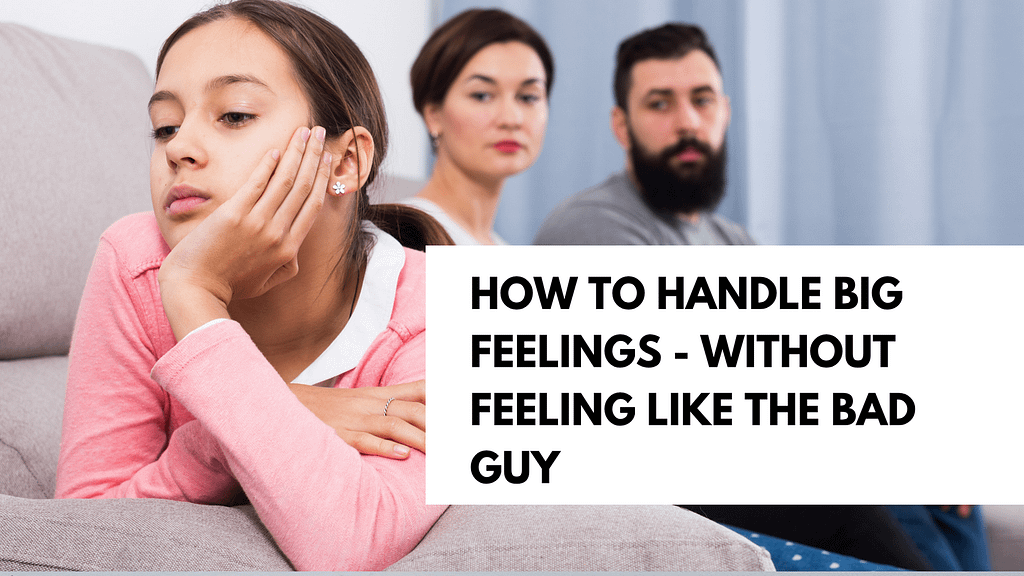
The parent of a 12-year-old recently shared this on Reddit, and it’s the kind of thing that will make any parent pause (and maybe laugh a little):
“I had to take screens away today and my son started arguing. I raised my voice because he wouldn’t stop interrupting me, and he said, ‘Now you’re yelling at me!’ Then he stormed off crying and said, ‘You can’t do this to me! I’m feeling sad! Don’t you care that I’m sad?!’”
Sound familiar? If you have a tween (10–12 years old), chances are you’ve heard a dramatic “You don’t care about me!” after enforcing a rule. Suddenly you’re not just the parent who took away screen time but the villain who “made” them sad.
So how do you respond in a way that keeps the boundary firm and shows you’re not heartless?
Tween Logic: Big Feelings, Big Words
First, let’s get this out there: tweens are in a tricky in-between space. They’re not little kids anymore, but they’re not teens either. Their emotions are huge, their words are dramatic, and their sense of fairness is fierce.
When you take away a privilege like screens, they don’t just see it as a consequence. In their world, it can feel like a personal attack.
And in a way, they’re testing you. They want to know:
- Do my parents still love me when I’m mad at them?
- Will they back down if I cry hard enough?
Sadness Isn’t Always Sadness
What this parent said to their son was actually pretty wise:
“When we get consequences, it makes us feel bad. Sometimes we think we’re sad, but really we’re frustrated or angry or even remorseful for our behaviors that led to the consequences.”
This is gold because it does something powerful. It helps tweens sort through feelings they can’t always name.
A 12-year-old might say “I’m sad,” but what they really mean might be:
- “I’m frustrated you won’t give in.”
- “I feel embarrassed about losing control.”
- “I’m angry because I lost my screen time.”
Helping them see that sadness is often frustration in disguise teaches emotional awareness and that’s a skill they’ll carry for life.
Do You Care If They’re Sad?
Here’s where many parents get stuck. Your child wails:
“You don’t care that I’m sad!”
And the truth is… you do care. You care about their wellbeing. You care about their feelings. But you don’t (and shouldn’t) feel obligated to erase every moment of sadness.
Because here’s the hard truth (and something kids need to learn): consequences don’t always feel good and that’s the point.
It’s okay to calmly say:
- “I do care that you’re upset. But it’s also okay for you to feel upset about a consequence.”
- “I love you, and that’s why I set rules. It’s my job to teach you, even when it doesn’t feel good in the moment.”
What to Say in the Moment
Instead of falling into a back-and-forth debate about whether you “made” them sad, try these phrases:
Validate the feeling (without caving):
“I get that losing screens makes you sad and frustrated.”
Name the purpose:
“I’m not trying to hurt your feelings. I’m trying to help you learn how to follow the rules we have.”
Reassure connection:
“I love you even when you’re upset with me.”
Why This Matters for the Long Game
It can feel easier to give in because who wants to be called “a disturbing parent” by their own kid? (Yes, this Reddit parent’s tween actually said that.)
But holding firm teaches a crucial lesson:
- Your feelings matter, but they don’t erase your responsibility.
That’s what consequences are for not to punish, but to teach.
If we back down every time a child cries “you don’t care about me,” we teach them that tears are a way out of accountability.
Signs It’s More Than Just Consequence Sadness
Of course, there’s a balance. Consequence-related tears are one thing. But if your tween seems sad all the time, withdrawn, or hopeless, it might be a sign something deeper is going on like anxiety or depression.
If that’s the case, reach out to their teacher, school counselor, or a paediatrician for support.
A Final Thought
Parenting tweens is messy. They’ll cry, they’ll argue, they’ll tell you you’re ruining their lives because you took the iPad away.
But here’s the good news: they’ll survive those moments. And so will you.
By calmly holding the line, naming feelings, and reminding them you care even when they’re sad, you’re teaching something far bigger than any single consequence.
You’re teaching them that love and limits can exist at the same time. And that’s one of the most important lessons they’ll ever learn.